
In Preparation for Personal Filing Tax Season: Why your Odometer Reading Matters More Than You Think
by
 Amanda Roothman on 26 February
Before you blink twice, personal filing season will be in full swing.
Most taxpayers begin gathering the usual documents: 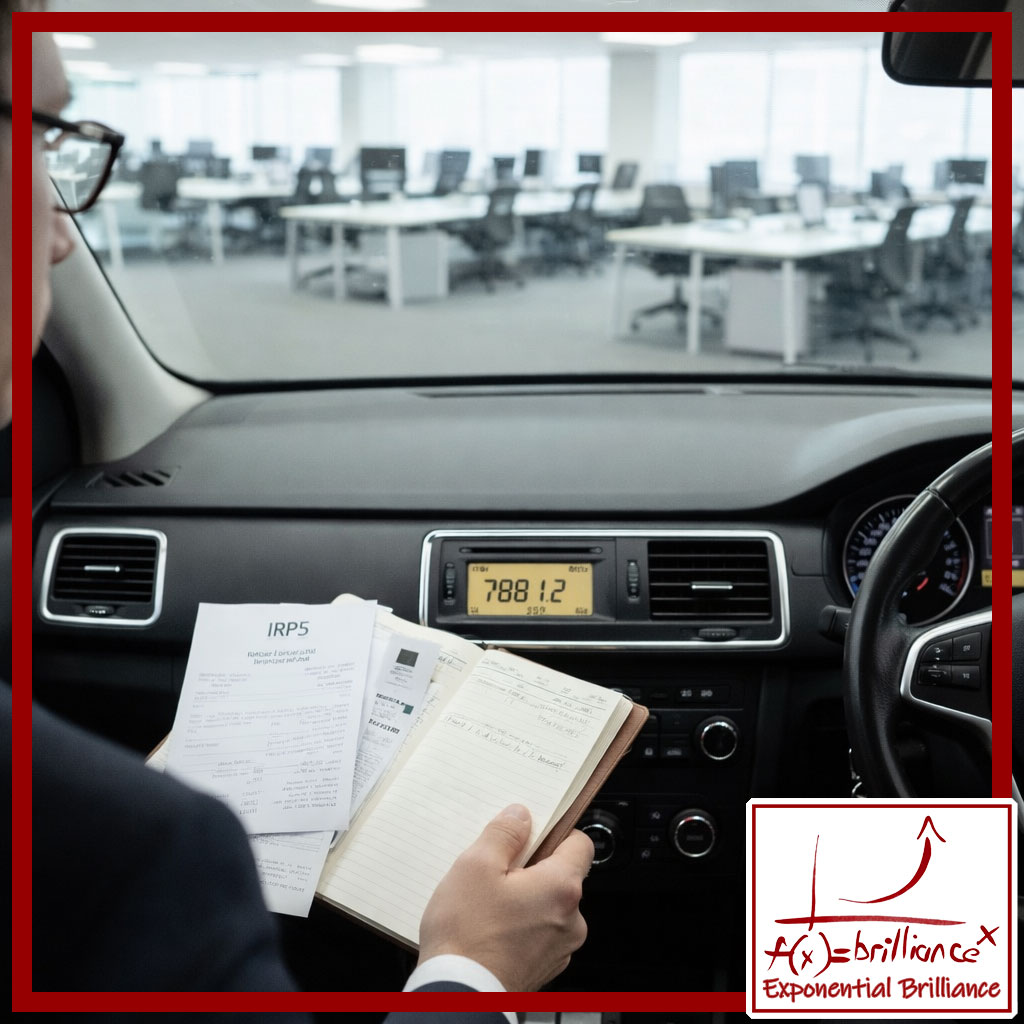
- IRP5s
- Medical Aid Certificates
- Retirement Annuity Certificates
- Investment Income Certificates
But if you receive a travel allowance, there is one document that can materially affect your tax outcome - and it is often overlooked:
Your Opening and Closing odometer readings.
This is not an administrative formality.
It is a compliance requirement.
Let's unpack why.
Travel Allowance: What the Law Actually Says
In terms of Section 8(1)(b) of the Income Tax Act, a travel allowance may only be deducted to the extent that business kilometres are substantiated.
That word matters: substantiated.
Receiving a travel allowance does not automatically entitle you to a deduction.
Your employer reflects the allowance on your IRP5.
SARS taxes it upfront.
The deduction only becomes available if the business portion of travel can be proven.
Not estimated.
Not assumed.
Proven.
Why the Odometer Reading Is Critical
To calculate your allowable travel deduction correctly, SARS must be able to determine:
- Total kilometres travelled during the year of assessment
- Business kilometres travelled (per your logbook)
- The percentage split between business and private use
Total kilometres travelled during the year can only be determined by comparing:
Opening odometer reading (1 March)
with
Closing odometer reading (end of February)
Without those readings, total annual kilometres cannot be established.
And without total kilometres, the business-use percentage cannot be calculated.
No percentage.
No calculation.
No defensible claim.
Logbook + Odometer = Defensible Deduction
A properly maintained logbook records:
- Date of travel
- Destination
- Purpose of trip
- Kilometres travelled
But the logbook alone is not sufficient.
It must reconcile to total annual kilometres per the odometer.
If the figures do not reconcile, the deduction becomes vulnerable.
This is where many taxpayers experience difficulty during SARS verifications.
What Happens During a SARS Verification?
Travel allowance claims are frequently selected for verification.
When this occurs, SARS will typically request:
- Opening odometer reading
- Closing odometer reading
- Vehicle details
- Logbook
If odometer readings cannot be produced, SARS will disallow the entire travel claim.
Yes — the entire claim.
This can result in:
- Additional tax payable
- Interest
- Potential understatement penalties
All because one photograph was not taken at year-end.
Preparation Before Filing Season Opens
At Exponential Brilliance, we believe tax filing season should not be reactive.
It should be prepared for.
By confirming vehicle details and odometer readings before filing season opens, we ensure:
- Accurate apportionment of business vs private use
- Correct calculation under either the deemed cost table or actual cost method
- Reduced audit exposure
- A defensible deduction should SARS request supporting documentation
The choice between the deemed cost method and the actual cost method is not a default setting - it should be evaluated annually to ensure the most accurate and defensible tax outcome.
It is also important to note that where the actual cost method is used instead of the deemed cost table, supporting documentation for vehicle expenses (fuel, maintenance, insurance, licence fees, etc.) must be retained.
The business-use percentage derived from your odometer readings is then applied to those actual expenses. Without proof of expenditure, the claim cannot be calculated — even if your kilometres are properly substantiated.
Compliance is not fear-driven.
It is strategy-driven.
If you would prefer a structured review of your travel allowance position before submission, our team would gladly assist.
Download Your Travel Allowance Compliance Checklist
Before filing season opens, ensure your travel allowance claim is fully defensible.
We’ve prepared a structured Travel Allowance Compliance Checklist to help you confirm:
- Odometer documentation
- Logbook reconciliation
- Deemed vs actual method considerations
- Expense support (if using the actual cost method)
- SARS verification readiness
Preparation today prevents adjustment tomorrow.
Final Thought Before You Submit Your Return
If you receive a travel allowance and have not yet secured:
✔ Your opening odometer reading
✔ Your closing odometer reading
✔ A properly maintained logbook
Now is the time to do so.
Tax filing season rewards preparation - and penalises assumption.
A simple year-end odometer photograph can be the difference between a secure deduction and an expensive adjustment.
Conspicuous Excellence begins long before submission day.
.jpg)