A Fresh Proactive Provisional Tax Perspective - Second Period 2026
by
 Amanda Roothman on 28 January
Why Provisional Tax Requires a Proactive Approach in 2026
Every action becomes praiseworthy when driven by proactivity and positive intent.
As we reach the second provisional tax period for the 2026 year of assessment, this is the ideal moment to revisit provisional tax through a fresh, proactive lens — not as a last-minute compliance exercise, but as an intentional, informed business decision.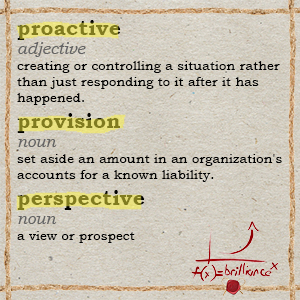
Provisional tax is not merely about meeting a deadline. It is about making deliberate, well-supported estimates at the right time, and understanding how those decisions shape both compliance outcomes and financial certainty.
Second Provisional Tax for the 2026 Year of Assessment
As many companies submit their second provisional tax return for the 2026 year of assessment, one question keeps coming up:
“Can we underpay now and fix it later?”
The answer depends — but the risk is often misunderstood.
SARS does not apply a one-size-fits-all rule to provisional tax estimates. Instead, the applicable rules differ depending on the level of taxable income, and misunderstanding these thresholds can result in avoidable penalties.
Can We Underpay Now and Fix It Later?
This approach is often driven by genuine cash-flow pressure. However, from a SARS perspective, provisional tax is primarily a disclosure exercise, not a payment negotiation.
SARS focuses on:
-
- What taxable income is declared, and
- When that estimate is submitted
Later payments may affect interest, but they do not retrospectively correct an incorrect estimate.
Understanding SARS’ Provisional Tax Thresholds
The Fourth Schedule to the Income Tax Act sets out different thresholds depending on whether a taxpayer’s taxable income exceeds R1 million or does not exceed R1 million.
Understanding which tier applies is critical during second provisional season.
Tier 1: Taxable Income Exceeding R1 Million
If your business expects to earn more than R1 million in taxable income, SARS requires that your second provisional taxable income estimate must be at least 80% of your actual taxable income for the year.
If it is not, SARS may impose an under-estimation penalty of up to 20% — even where there is an intention to make a top-up payment later.
👉 A post-year-end top-up may assist with interest, but it does not cure an under-estimated second provisional return.
Tier 2: Taxable Income of R1 Million or Less
For taxpayers whose taxable income is R1 million or less, the test is different — and more flexible, but still technical.
In this tier, the second provisional estimate must not be less than the lesser of:
-
- 90% of the actual taxable income, or
- The SARS “basic amount”
The basic amount is generally the taxable income from the most recent assessment. However, there is an important adjustment:
👉 If that latest assessment is older than 18 months at the time the second provisional return is submitted, the basic amount must be increased by 8%.
This uplift is often overlooked — and can unintentionally push an estimate into penalty territory.
Why Top-Up Payments Do Not Eliminate Penalty Risk
A common misconception across both tiers is that a later top-up payment will resolve any provisional tax shortfall.
SARS’ position is clear:
Under-estimation penalties are determined with reference to the second provisional estimate — not later payments.
Top-up payments reduce interest, not penalty exposure.
This distinction is critical and often only discovered years later during a SARS review.
Cash Flow vs Compliance: The Proactive View
SARS draws a clear distinction between:
-
- ❌ Incorrect or understated disclosure of taxable income, and
- ✔️Temporary inability to settle tax payable
Cash-flow pressure should be managed through payment timing, forecasting, and planning, not by under-stating taxable income estimates.
A simple principle applies:
You may pay tax late — but you should not declare it incorrectly.
Why This Matters for Second Provisional 2026
Under-estimation penalties:
- Are often imposed years later during SARS reviews
- Cannot be reversed by later payments
- Are avoidable with correct upfront disclosure
Understanding which tier you fall into, and which threshold applies, is essential when submitting your second provisional tax return for 2026.
If you are uncertain whether your estimate meets SARS’ requirements, it is far better to review it before submission than to defend it later.
Our Proactive Approach
Our proactive team channels their energy into matters they can influence positively. Their unwavering mindset allows them to carry their own weather, regardless of external circumstances.
If you would like support with your provisional tax planning and compliance for the 2026 year of assessment, we are here to help — calmly, clearly, and proactively.
#ProvisionalTax2026 #SecondProvisional #TaxCompliance #ExponentialBrilliance #BusinessOwnersSA #FinancialLeadership #ComplianceHub
.jpg)